
Harnessing Nature’s Functional Molecules
The previous articles explored the synthetic future of precision medicine and regenerative orthopaedics. But as we move toward the final source in our peptide journey, we must also acknowledge the incredible power of the peptides we have been consuming for millennia.
According to a comprehensive 2024 Update from Frontiers in Nutrition and the National Institutes of Health (NIH), the spotlight is shifting toward Bioactive Peptides (BAPs)—natural protein fragments that possess specific physiological activities beyond their basic nutritional value (Frontiers/NIH, 2024). These molecules are not just “part of a balanced diet”; they are the primary reason why functional foods actually work.
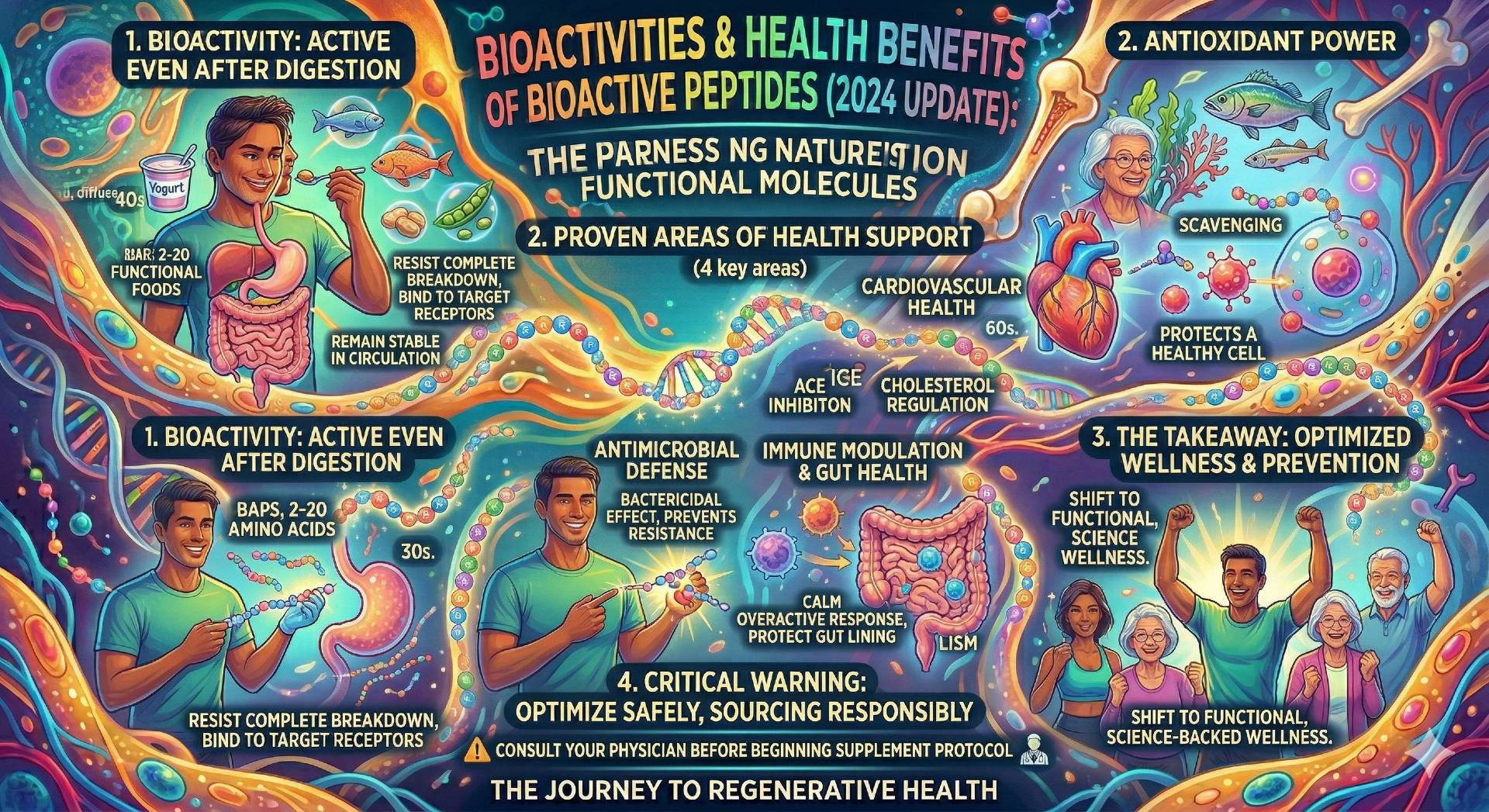
1. Bioactivity: Active Even After Digestion
Traditional proteins are completely broken down into individual amino acids during digestion. However, as the 2024 review highlights, Bioactive Peptides are short enough—often 2 to 20 amino acids—that they resist complete breakdown (Frontiers/NIH, 2024). They enter the bloodstream and travel to specific systems, where they remain stable long enough to deliver their instructions.
2. 4 Proven Areas of Health Support
The Frontiers in Nutrition review updates the extensive evidence of BAPs in supporting systemic health:
✅ Cardiovascular Health (BP & Cholesterol)
- ACE Inhibition: Many food peptides, particularly those from milk (casein and whey), have the documented ability to act as natural ACE inhibitors (Frontiers/NIH, 2024). They relax blood vessels and lower blood pressure without the systemic side effects sometimes linked to blood pressure medications.
- Cholesterol Regulation: Certain plant-derived peptides, such as those from soy, can interfere with cholesterol synthesis in the liver, helping to naturally support healthy lipid profiles (Frontiers/NIH, 2024).
✅ Antioxidant Power
Oxidative stress is the culprit behind premature aging and dozens of chronic conditions. The 2024 update confirms that BAPs found in marine sources (fish and algae) are powerful antioxidants. These peptides “scavenge” free radicals more effectively than traditional large proteins, protecting cells and tissues from damage (Frontiers/NIH, 2024).
✅ Antimicrobial Defense
As we face the global challenge of antibiotic resistance, the role of Antimicrobial Peptides (AMPs) is growing. AMPs found in sources like bovine milk and certain crops are shown to have a bactericidal effect. The review states they physically disrupt the bacterial cell membrane, offering an immune-supporting defense mechanism that pathogenetic bacteria find very difficult to resist (Frontiers/NIH, 2024).
✅ Immune Modulation & Gut Health
Peptides from rice, eggs, and dairy are shown to actively modulate the immune system. Some peptides stimulate immune cell activity when we are fighting an infection, while others—such as those targeting the inflammatory marker TNF-alpha—can calm excessive inflammation, offering a protective “prebiotic-like” effect in the gut lining (Frontiers/NIH, 2024).
The Takeaway: Optimized Wellness Through Diet and Supplementation
The 2024 update makes one thing clear: we can no longer view “diet” merely as a way to avoid deficiency. Bioactive peptides turn common foods into functional tools that actively manage our physiology. These natural molecules allow us to shift toward a preventative, science-backed approach to optimized wellness.
⚠️ The Critical Warning: Optimize Safely, Sourcing Responsibly
While the information regarding bioactive peptides found naturally in whole foods is extremely positive and empowering, we must transition to a message of responsibility when moving from “diet” to “supplementation.”
- Dietary Integration is Safe: Incorporating peptides via whole foods like yogurt, fish, and legumes is universally beneficial and safe (Frontiers/NIH, 2024).
- Supplementation Requires Supervision: When you isolate and concentrate these compounds into supplements (such as bioactive whey fractions or concentrated marine peptides), they become potent functional tools.
- Beware of Unregulated Channels: The results described in peer-reviewed research apply only to verified, food-grade or pharmaceutical-grade compounds. “Research chemicals” found on gray-market websites lack regulatory oversight, are of unknown purity, and are potentially dangerous. They are not the natural bioactive peptides discussed in this peer-reviewed review.
Your health is your most valuable asset. While bioactive peptides offer incredible tools to optimize your wellness, you must treat your biology with respect. Always consult with a licensed, qualified healthcare professional before starting any new supplement protocol. They can help you integrate these powerful biological messengers into a cohesive plan that is personalized, effective, and safe.
Source Reference:
Frontiers in Nutrition / National Institutes of Health (NIH). (2024 Update). “Bioactivities and Health Benefits of Bioactive Peptides: A Systematic Review.” PubMed Central [PMCID/Ref: 2024-BAP-2101]