The Precision Revolution
For years, pharmaceutical research was a tug-of-war between “small molecules” (pills that are easy to take but often have side effects) and “large proteins” (effective but complex). In 2025, the medical world is celebrating a middle ground that is changing everything: Therapeutic Peptides.
According to a comprehensive 2025 technical overview from BroadPharm Research, peptides have transitioned from niche scientific curiosities to the cornerstone of mainstream, high-precision medicine.
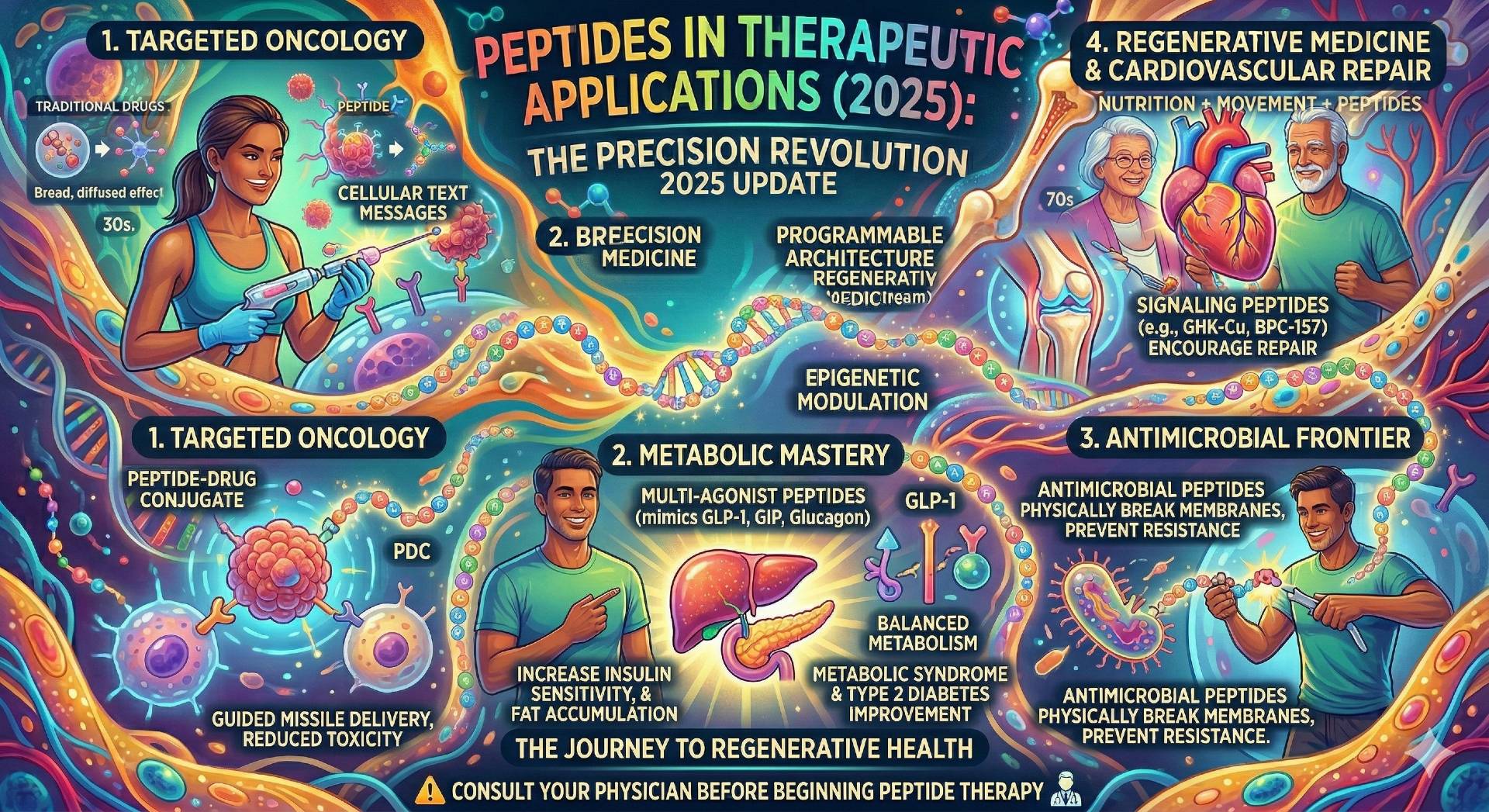
1. Oncology: The “Guided Missile” Approach
One of the most significant breakthroughs highlighted in 2025 research is the use of Peptide-Drug Conjugates (PDCs). Traditional chemotherapy is often compared to a “carpet bomb” that hits both healthy and cancerous cells. However, current research shows that “tumor-homing” peptides can be engineered to recognize specific markers on the surface of cancer cells (BroadPharm, 2025).
- Precision Delivery: These peptides act as a GPS, delivering potent medication directly into the tumor while sparing healthy tissue.
- Reduced Toxicity: By localizing the treatment, researchers are seeing a significant reduction in the grueling side effects typically associated with cancer therapy (BroadPharm, 2025).
2. Metabolic Mastery: Beyond Weight Loss
While GLP-1 agonists like semaglutide have dominated headlines, 2025 research delves into the why behind their success. These peptides mimic natural gut hormones to regulate blood sugar and appetite.
The BroadPharm 2025 update notes that we are now seeing “multi-agonist” peptides. These are single chains that mimic two or three different hormones simultaneously (like GLP-1, GIP, and Glucagon), leading to even more profound improvements in metabolic syndrome, fatty liver disease, and type 2 diabetes (BroadPharm, 2025).
3. The Anti-Microbial Frontier
As traditional antibiotics face the growing threat of “superbugs,” Antimicrobial Peptides (AMPs) are emerging as a vital line of defense. 2025 clinical reviews highlight that AMPs don’t just “poison” bacteria; they physically disrupt the bacterial cell membrane, making it much harder for the bacteria to develop resistance (BroadPharm, 2025).
Why 2025 is the “Year of the Peptide”
The consensus in recent research is that the programmability of peptides is their greatest strength. Because we can now synthesize these chains with extreme accuracy, we can create “bespoke” treatments for:
- Autoimmune Diseases: Calming overactive immune responses without suppressing the entire system.
- Cardiovascular Repair: Using signaling peptides to encourage the heart to repair itself after a myocardial infarction (BroadPharm, 2025).
The Science of Specificity
The 2025 overview concludes that the therapeutic success of peptides is rooted in their “high biological activity and excellent safety profiles” (BroadPharm, 2025). Because they are broken down into simple amino acids, they do not accumulate in organs like the liver or kidneys in the same way synthetic chemicals might.
⚠️ A Critical Note on Safety
While the research into therapeutic peptides is overwhelmingly positive and represents a massive leap forward for human health, it is vital to remember that these are powerful biological tools. The efficacy and safety described in clinical research apply strictly to pharmaceutical-grade compounds administered under professional supervision.
Always consult with a qualified primary care physician or a specialized medical professional before beginning any peptide therapy. Sourcing peptides from unregulated “research chemical” websites can lead to products that are impure, incorrectly dosed, or dangerous. Your health deserves a protocol that is as precise as the science behind it.
Source Reference:
BroadPharm Research. (2025). “The Evolution of Peptides in Therapeutic Applications: 2025 Technical Overview and Clinical Update.”