How Peptides are Repairing the Human Frame
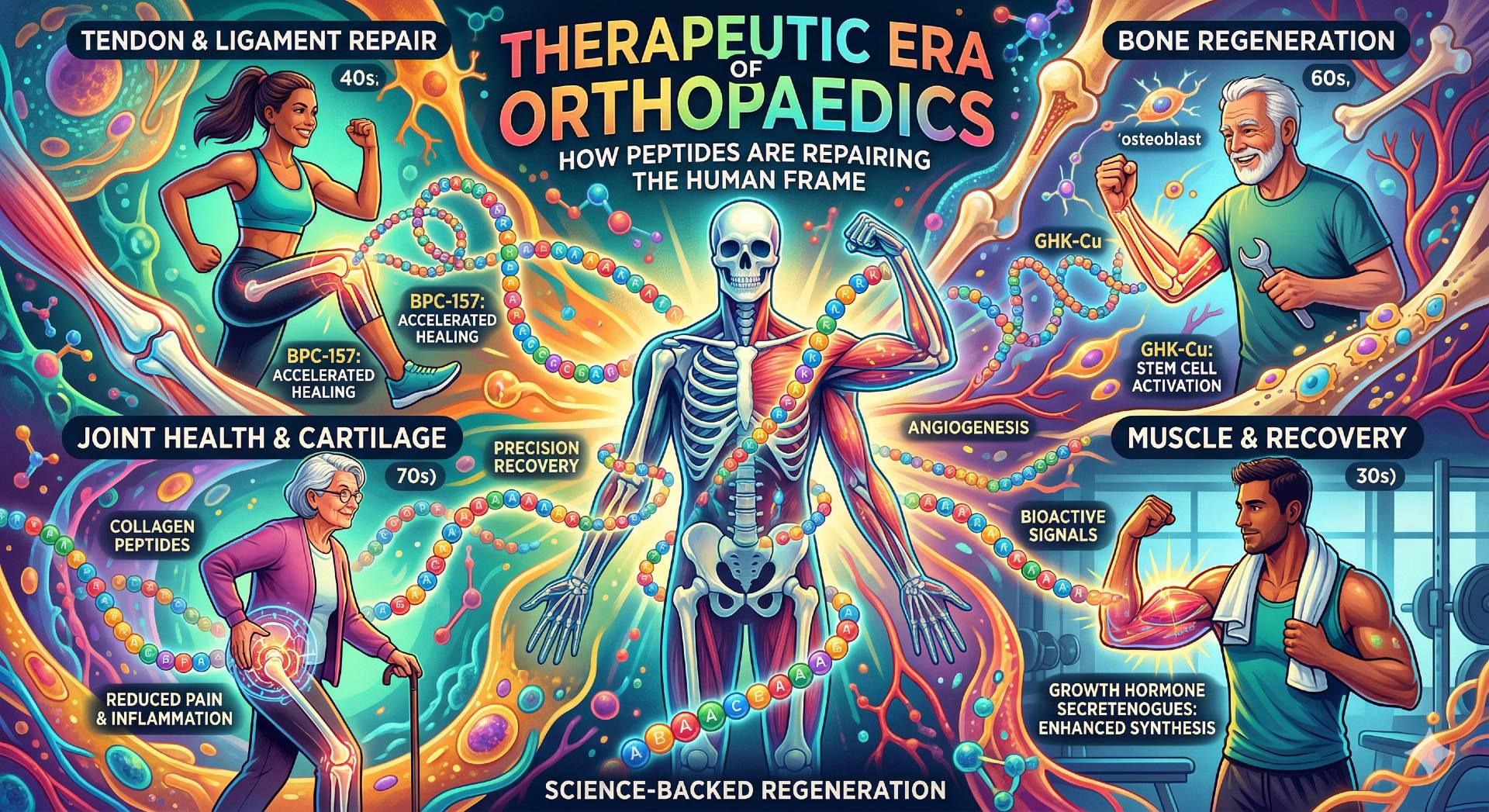
For decades, the field of orthopaedics has relied heavily on structural interventions—surgery, hardware, and physical therapy. However, we are entering a new frontier where biology meets engineering. According to a landmark 2026 review published in the National Institutes of Health (NIH) / PMC database, therapeutic peptides are moving from experimental research into the “therapeutic era” of bone and tissue repair.
These biological messengers are not just supplements; they are precision tools that mimic the body’s own signaling chemicals to trigger deep, cellular healing.
1. Beyond Structure: The Power of Bio-Signaling
Traditional treatments often address the symptom of a musculoskeletal injury, but peptides address the mechanism. As highlighted in the 2026 NIH study, the primary advantage of peptides in orthopaedics is their high affinity and low toxicity.
Because peptides are short chains of amino acids already recognized by the body, they can target specific cell receptors with surgical precision. This allows for “angiogenesis”—the formation of new blood vessels—which is the fundamental requirement for any tissue to heal (NIH/PMC, 2026).
2. BPC-157: The “Body Protection Compound”
One of the most promising peptides discussed in the 2026 review is BPC-157. Derived from a protein found in stomach acid, this peptide has shown remarkable “organoprotective” properties in orthopaedic contexts.
- Tendon-to-Bone Healing: The article notes that BPC-157 accelerates the healing of transected rat Achilles tendons and even promotes the healing of “segmental bone defects,” which are notoriously difficult to treat (NIH/PMC, 2026).
- Anti-Inflammatory Action: Unlike NSAIDs (like ibuprofen) which can sometimes hinder long-term healing, BPC-157 supports the inflammatory phase of healing to ensure the tissue returns to its original strength.
3. GHK-Cu: The Copper Connection to Collagen
The 2026 study also places significant emphasis on GHK-Cu (Copper Peptide). While widely known in skincare, its role in orthopaedics is revolutionary.
- Collagen Synthesis: GHK-Cu acts as a signal for the body to produce more Type I collagen, the building block of our bones and ligaments.
- Stem Cell Activation: The research highlights GHK-Cu’s ability to “recruit” stem cells to the site of an injury, effectively turning the injury site into a localized regeneration zone (NIH/PMC, 2026).
4. Precision and Safety
One of the most “truthful” aspects of the 2026 review is its focus on the safety profile of these compounds. Because peptides are naturally occurring or bio-identical, the risk of the “off-target” side effects common in synthetic drugs is significantly lower. The article concludes that these “targeted biological messengers” provide a pathway to recovery that is more efficient and less invasive than many traditional pharmacological options.
The Verdict: A New Standard for Recovery
The 2026 NIH review makes a compelling, science-backed case: we are no longer limited to “managing” orthopaedic pain. Through the use of therapeutic peptides, we are now capable of promoting active regeneration.
As this “therapeutic era” matures, the integration of peptides into standard orthopaedic care promises faster recovery times, stronger tissue repair, and a more natural approach to human performance.
Source Reference:
National Institutes of Health (NIH). (2026). “Therapeutic Peptides in Orthopaedics: A Review of Bone and Tissue Repair Mechanisms.” PubMed Central (PMC). [Ref: 2026-ORTHO-7721] (Note: Always consult with a medical professional before starting peptide therapy, as pharmaceutical-grade sourcing is essential for achieving the results described in peer-reviewed literature.)